Self-hosted installers for Linux, built from the open release channel. Version 1.8.1-rc12, published as a zip archive with the deployment assets inside.
Current installer version 1.8.1-rc12 · the licence key is requested separately and is free for up to five users.
ShimoDocs in numbers
ShimoDocs is a self-hosted document collaboration suite for real-time docs, writers, spreadsheets, presentations, forms and tables, with configurable AI agents built into every product, deployed into a private cloud you control.
Free plan
5 users
Team plan
$5 per user per month
Annual billing
20% off
Linux installer (amd64)
357 MB
Linux installer (arm64)
325 MB
Deployment
single-node or high-availability Kubernetes
Packages
Two architectures, one installer format.
Both builds ship the same suite — documents, tables, slides, forms, AI workspace and the administration surfaces. Pick the architecture that matches the machines you are deploying to.
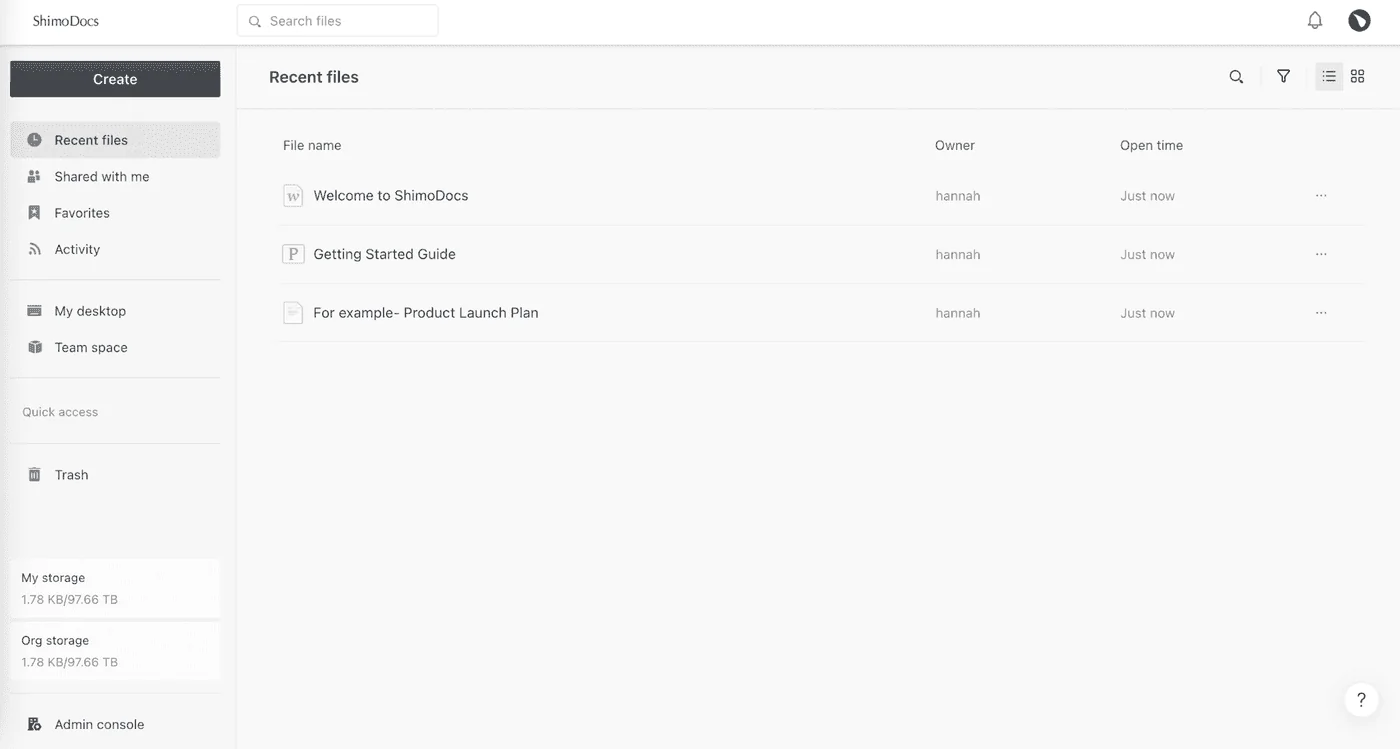
The installed workspace opens on the files your team already shares, with personal and organisation storage accounted for separately.
Licence
Free for up to five users, perpetual, no credit card.
The global build is licensed per deployment, not per month. Email the team to request the free perpetual licence for teams of five or fewer; larger teams are quoted by the sales team.
The request opens a prefilled message to [email protected] so the deployment details reach us in one step instead of three. Install the package first if you prefer — the installer does not require the key until you activate the deployment.
Before you install
Read the deployment guides first.
The help center covers the Kubernetes deployment, middleware configuration, AI endpoint setup, backups and the checks we recommend before a rollout reaches real work.